Tactical Analysis: 4-3-3 vs 4-2-3-1 ?
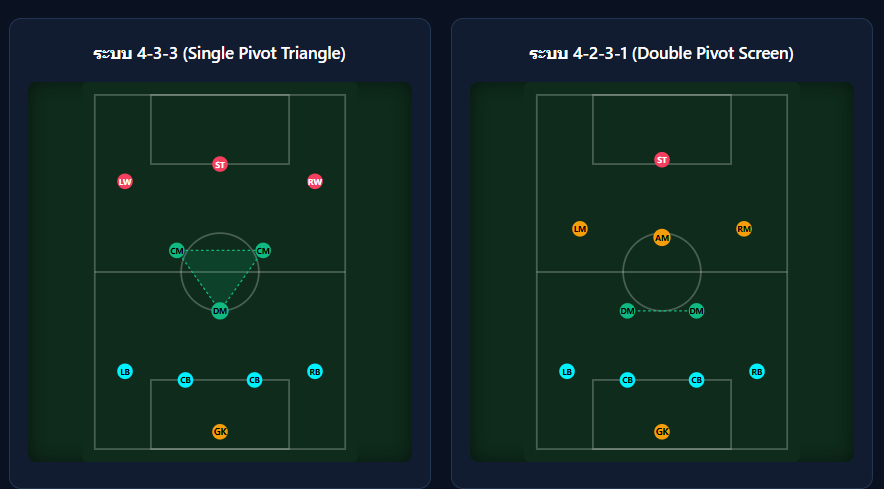
When looking at starting lineups before a match, football fans frequently encounter formations like 4-3-3 or 4-2-3-1. At a glance, both systems look similar with a back four and a front three. However, the true difference lies in the midfield structure—affecting possession, pressing, and defensive stability.
If you love keeping an eye on the title race and checking ผลบอลสด while analyzing match tactics, let's break down the structural differences between these two formations.
1. Understanding the Numbers
4-3-3: Features 4 defenders, 3 midfielders (typically arranged in a triangle with a single defensive pivot and two box-to-box No. 8s), and 3 forwards.
4-2-3-1: Features 4 defenders, a double pivot in central midfield, a No. 10 attacking midfielder, two wingers, and a central striker.
2. Deep Dive into 4-3-3: Balance and Pressing
Key Strengths:
Excellent central control using a midfield triangle, offering multiple passing angles.
Ideal for high pressing, as the front three can pressure opponent center-backs right from the front.
Wingers provide width while No. 8s can make late runs into the penalty box.
Limitations:
Heavy burden falls on the single defensive midfielder; if pulled out of position, space opens up in front of the center-backs.
Demands exceptionally high physical energy throughout 90 minutes.
3. Deep Dive into 4-2-3-1: Stability and Creativity
Key Strengths:
Enhanced defensive stability through a double pivot protecting the backline.
A dedicated No. 10 links play and feeds the central striker directly.
Easily transitions into a compact defensive shape (like 4-4-2) when out of possession.
Limitations:
If the double pivot plays too conservatively, the team may lack support in the final third.
Heavy reliance on the No. 10; if marked out of the game, creativity can stall.
4. Summary and Real-World Application
Neither system is universally superior; success depends heavily on player profiles. The 4-3-3 suits teams prioritizing possession and aggressive pressing, whereas 4-2-3-1 offers structural defensive security combined with a creative playmaker. During actual matches, formations fluidly shift depending on whether the team has possession or is defending.
For fans who want to monitor match fixtures and check ผลบอลสด alongside tactical analysis, following real-time updates enhances the overall viewing experience.
FAQ: Frequently Asked Questions
Q1: What is the biggest difference between 4-3-3 and 4-2-3-1?
A1: The midfield setup. 4-3-3 uses a single pivot with two No. 8s, while 4-2-3-1 utilizes a double pivot and an advanced No. 10.
Q2: Why is 4-2-3-1 often considered defensively solid?
A2: Because two deep-lying central midfielders create a double shield in front of the defense, protecting central areas effectively.
Q3: What playing style suits a 4-3-3 formation?
A3: It suits teams aiming for high possession, intensive high-pressing, and dynamic midfield runners supporting the attack.
Q4: What is the main responsibility of the No. 10 in 4-2-3-1?
A4: To link midfield and attack, find space between the opponent's lines, and create goalscoring opportunities.
Q5: Where can fans check ผลบอลสด and follow match analysis?
A5: Fans can track real-time match scores and live data updates across dedicated football platforms.